Open Ocean Forecasts Will Decide the Navy's Next Weather Model
A report says NEPTUNE is poised to take over the Navy's global weather model, with gains over open ocean. The record behind that promise is one sentence, and the sentence is the weak part.
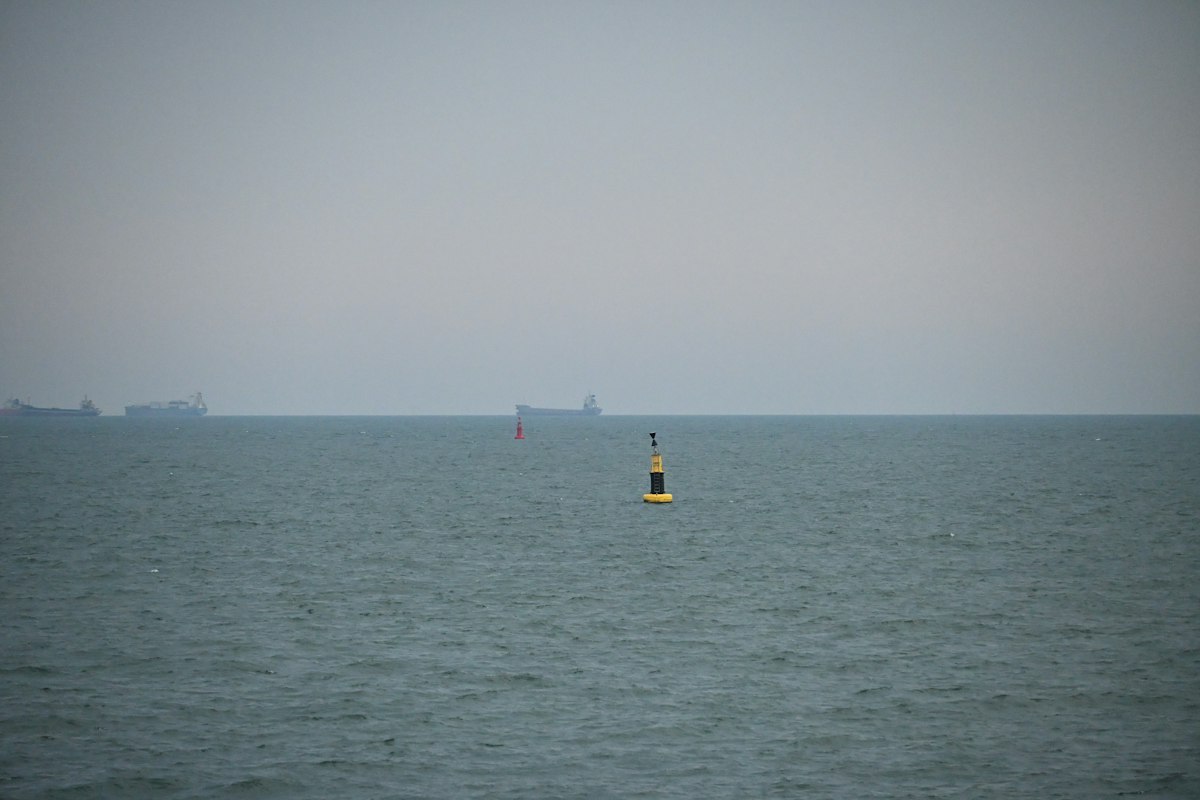
On November 19, a syndicated science report said NEPTUNE is poised to replace the Navy's global weather model. The promise attached to that swap was narrower and more interesting: better forecasts over open ocean. The record is a sentence. It carries a verb, a promise and a place, and the place is the argument.
A military weather service earns its model swap at sea. Averaged skill scores quoted in announcements say little about what happens there. Over land, surface stations pin down a wrong forecast within hours. That feedback is cheap, and its absence at sea is why the ocean subset of a verification record is what a fleet pays for.
Marine forecasting is where a global model is least watched and most needed. A ship does not get a second weather report from a neighbor with a window. It gets the model, or it gets silence. That asymmetry is why the phrase over open ocean deserves more attention than the model's name.
Why Open Ocean Skill Is Different
A forecast over land is checked cheaply. Thermometers, airport observations and ship reports sit on fixed or semi-fixed points, and they reveal a model's error before the next run finishes. The Pacific cannot be checked that way. The nearest routine report may be a cargo ship that chose its own route, or a buoy moored years ago.
Marine verification is a sampling problem wearing the clothes of a scoring problem. Where truth is observed rarely, a model can post an excellent mean error while leaving a convoy inside a sea state it never resolved. The useful version of a marine forecast claim therefore reports how many independent observations produced the mean, and where they were. Announcements almost never carry that figure. The figure is the weakness.
The Incumbent We Cannot Name
The report does not say which model NEPTUNE would displace, nor who builds it, nor when a decision is expected. That gap is not cosmetic. An incumbent global model sits inside a delivery chain, because its output feeds routing advice and the products that leave port. By how such systems are typically organized in the United States, the model is shared with civilian forecast centers, so replacing it changes paperwork before it changes weather.
Two things follow. A replacement is an interface change before it is a science change: the newcomer must produce what the incumbent produced, on the same clock. And a gain claimed over open ocean points at the region the incumbent's own users already consider weak. Nobody advertises a fix in a place nobody complains about.
Observations Are Sparse Where Water Is
Ocean skill depends more on the assimilation step than on the timestep. Wind, temperature and humidity above a storm are read from orbit as radiances, then inverted into the variables a model can use. That inversion is tuned by surface type, and open water, sea ice and coast emit differently.
Satellites never touch the water.
The instruments that do touch it are few and fragile. A moored buoy reports from a single point, its anemometer above a surface the model treats as one cell edge, its mount corroding in salt air. Ships go where cargo goes. So the region with the least truth is the region a navy operates in. That mismatch is older than any model named in a press release.
How a Replacement Actually Wins
Competitions between global models are usually settled by parallel running. The entrant runs beside the incumbent on the same inputs, and both are scored against the same reports. Whoever wins the ocean subset at the lead times a fleet uses should take the job. Everything else in an announcement is context.
Lead time is the part that gets flattened in summaries. A short-range wind forecast and a medium-range one are different products with different uses, and a model that improves the first can quietly lose the second. The supplied report names neither the range nor the ocean basin tested. Ask a working forecaster which verification runs were scored against drifting buoys and which were scored against ships. The answer changes the mean. A reader cannot check the promise from the announcement, and that is a fact about the record rather than about the model.
The Strongest Case Against This Reading
A fair counter-argument exists. Error over open ocean is often dominated by a model's own resolution rather than by the shortage of reports. A coarse model smears a cyclone's core, and a finer one can place it. Placement alone changes wave height, wind and routing advice far from any instrument. On that logic the new model delivers the promise without a single added buoy.
The argument is strong, and it holds up poorly at sea. Resolution gains are the most predictable claim in numerical weather prediction. They are also the least reliable in the far ocean, because a finer grid changes convection, cloud and the surface fluxes that satellites read. Verification has to be done where the gain is claimed. A good reason to improve is not a measurement.
What a Better Ocean Forecast Changes Downstream
The consequence of real skill at sea is commercial before it is tactical. A merchant route that avoids a cyclone core burns less fuel and puts less stress on containers, crew and hull. Those effects show up in shipping records, which is why an open-ocean improvement is worth watching for a reader who never sails.
Whether the public version of that benefit arrives depends on whether the new model's output reaches civilian products. The supplied report does not say. Shared operational models have historically crossed agency boundaries, according to how such arrangements are usually described rather than according to any document in hand. That chain decides who else improves.
What Would Close This Story
The missing pieces are specific. What NEPTUNE stands for, and who developed it. Which model it replaces, and which centers consume its output. The resolution, the assimilation scheme, and the observation counts behind any score. The parallel-run window, the lead times, and whether a transition is scheduled or merely approved.
Some of that will surface when a service announces a transition date. More of it lives in conference abstracts and model documentation, which is where ocean numbers usually are. Homeworld Press will re-report when a primary record exists. We could not confirm any of it from the material we were given, and a secondary sentence is not a verification record.