NASA Pushes Mars Rotor Blades Past the Sound Barrier
A ground campaign takes helicopter blades into transonic flow on the one planet where a rotor has no margin left over
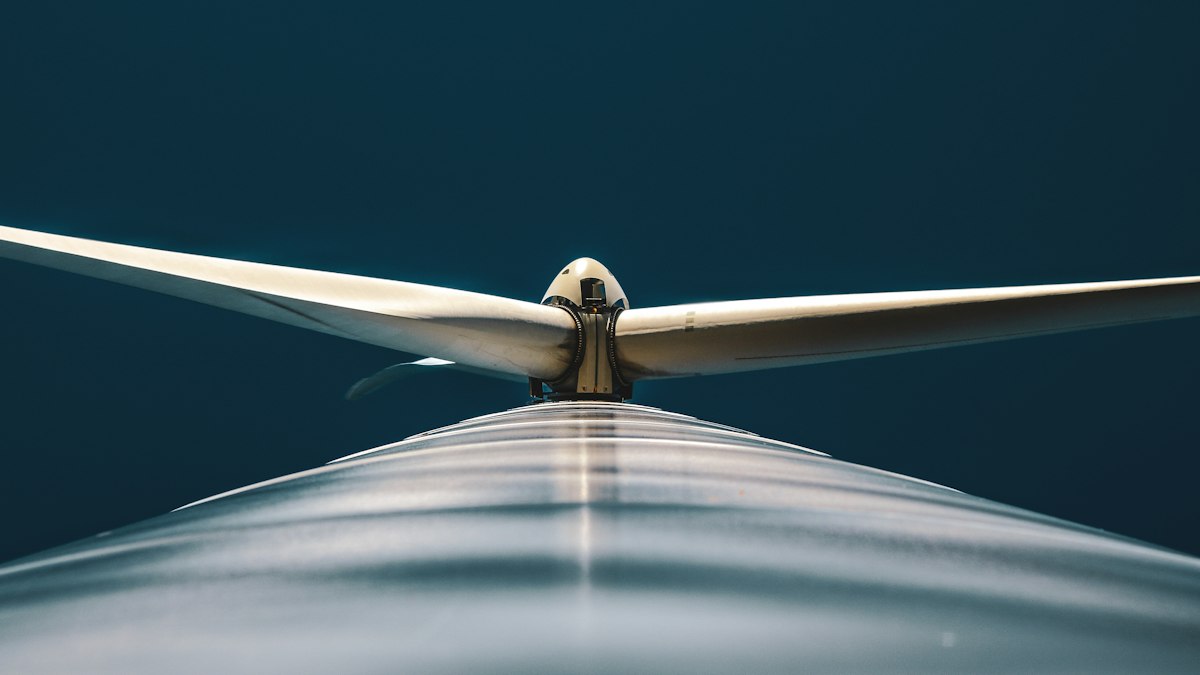
The Object on the Test Stand
A helicopter blade is a dull object until you look at its tip. The root barely moves. The outer tip travels faster than every other part of the rotor, and it decides whether the machine flies or shakes itself apart. A release dated Nov 17, 2026 puts that tip past the speed of sound, in Martian air.
The argument worth testing is this one. Transonic tip flow is familiar territory in rotor design. The news is where the test sits: past that wall, in air with no reserve. On Mars, the standard escapes, a longer blade or a slower rotor, are exactly what the design cannot afford. Lift is air times acceleration. Mars supplies almost no air, so a rotor needs speed and area, and the thinner the air, the more of each it requires. Nobody has ever filed a complaint that a Mars helicopter produced too much lift.
On Earth, a tip that reaches the sound barrier brings a shock wave, a drag penalty and buffet that shows up in the airframe. Mars changes the exchange rate, not the physics. Lift comes from pushing air downward, and Mars has very little air to push. A Mars rotor therefore spins fast and wide just to hover. It arrives at transonic flow because it has no other option.
What a Shock Wave Costs in Thin Air
Start with the force. The drag a shock wave creates scales with the density of the air around it. Mars surface air is sparse, so the absolute loads at the tip should stay small even when the flow regime is entirely new. On that reading, crossing the barrier on Mars costs less force than crossing it here. Nobody should expect a violent event.
Cost in force is not the only cost. In rotor practice, the trouble with transonic tips is a change in how pressure sits along the blade, and with it a shift in the pitching moment. A Mars helicopter carries little spare control authority. At the small chord and slow forward speeds of these machines, the flow over a blade is not the clean high-Reynolds case the textbooks assume. A pressure shift at that condition is a worse hazard than the extra drag it arrives with.
The two effects also feed each other. A pressure shift moves the stall boundary. A moved stall boundary then changes the rotor speed at which the tips go supersonic. That coupling is why the test belongs on a stand and not in a guess.
Why the Ground Test Is the News
Supersonic tip flow is not something a Mars flight can teach you, because a small rotor carries no instrumentation to see it. It is a ground-campaign problem. A campaign builds the blade, mounts it, runs it in conditions that imitate the planet, and reads the loads before a flight article risks the machine. The headline verb does the work: NASA pushes blades, and blades are what someone mounts on a stand.
The imitation is where the honest doubt lives. A ground facility must reproduce Martian density and temperature, and it usually does so with a different gas and a different structural vibration environment. Test sections have walls. Walls send pressure waves back into a rotor that is generating its own shocks in this regime. Any transonic result carries a correction for that interference, and that figure rarely survives into a summary line.
Scale and speed cannot both match.
That constraint is what makes the campaign hard, and it explains why a space agency keeps running blades on the ground after a helicopter has already flown on Mars. A flown helicopter proves the concept. A stand proves the next machine, which must be heavier and carry instruments someone would regret losing.
The Case Against the Headline
The best objection is that none of this is new. Rotor designers have chased tip compressibility for as long as blades have turned under power, and fast compound aircraft still fight it. On that reading, the agency rediscovered a known wall in air nobody had tested a rotor in, and the practical gain is modest.
The answer to that objection is that the wall behaves differently when every dimension of the machine is small. Blade chord is short, which puts the whole blade in a Reynolds regime where the boundary layer is fragile and separation is close. Air density is low, which means the rotor needs a large planform and high speed to hold the vehicle up. Structural mass is unforgiving, because a gram of blade is a gram the landing stage paid to deliver. A known wall crossed under those conditions must be redesigned around, which is a different engineering act than designing under it.
There is also an institutional argument on the other side: transonic rotor work in thin air costs slow tunnel time, and the findings travel badly. Results from a small blade at low density do not transfer neatly to an aircraft anyone will build for Earth. A program that wants helicopters on Mars pays that cost regardless. A reader who thinks the same money would fund more science inside an instrument package is making a fair claim, and no aerodynamicist can refute it.
What the Announcement Does Not Settle
Here is what the release does not settle, stated as a list rather than as a complaint. It does not say which facility ran the blades. It does not say what pressure and temperature stood in for the Martian surface. It does not say how close the test blade was to flight hardware, nor what the tip experienced in load and vibration. Without those details the achievement is a direction of travel, not a measured margin.
Four questions decide whether this matters. Was the blade flight hardware or a model? Did the pressure distribution show a shock that moves with pitch, or one that stays put? Did the rotor lose lift smoothly or step down hard? And did the correction for tunnel walls come out larger than the effect it was measuring? Those answers separate a milestone from a curiosity.
One more limit belongs to this article rather than to the program. The full release, with its facility name and its measured quantities, was not reachable from this desk while the piece was written. Nothing above should be read as a report of measurements. What is here is reasoning about a headline claim, and reasoning is where a reader can push back.
Where This Lands on the Next Machine
Practically, a supersonic tip changes the shape of the next rotor before it changes any flight plan. Blade planforms get wider toward the tip and thinner in the outer region, the way a propeller is shaped for speed rather than lift. Twist distribution gets renegotiated. And pitch control has to cover a pressure shift that the previous generation never expected. None of this is exotic; it is the ordinary consequence of designing past a wall instead of under it.
It also changes the argument about scale. A rotor that tolerates transonic tips can carry more mass per unit of blade, and that constraint keeps Mars helicopters small. If those tips survive the regime on a stand, the mass ceiling moves, and the instrument package moves with it. That is the consequence mission planners care about, and it is what justifies the hours in the facility.
For the reader who follows this program from a distance, the practical effect is a duller news cycle, and that is a good sign. Rotor work that stays on the ground for years is work that will not fail at altitude on another planet. The exciting version of this story would be a helicopter that shook itself apart. The published version is a test stand and a set of pressure curves nobody outside has read yet.
Three Lines to Look For
When the technical paper surfaces, two lines in it will say more than the summary did. The first is the tip Mach number quoted with the chord Reynolds number, as a pair. The second is the ratio of measured power to the power the design code predicted, and that ratio is the real margin. The third is whether the report gives pressure distributions along the blade or only integrated loads. Integrated loads say that a blade survived; pressure distributions say why.
Until then, the defensible statement is narrow. A Mars-class rotor blade has been taken past the speed of sound in a test condition, according to the release dated Nov 17, 2026. That is a fact about a facility and a blade, and it is not yet a fact about a machine in flight. Anyone who says this shortens a timeline to a crewed outpost is quoting a press office rather than a measurement.