Webb Detects Dust Halos Indicating Mars-Sized World Impacts
NASA’s recent observations of distant dust halos raise questions about the frequency of planetary smash‑ups in young systems.
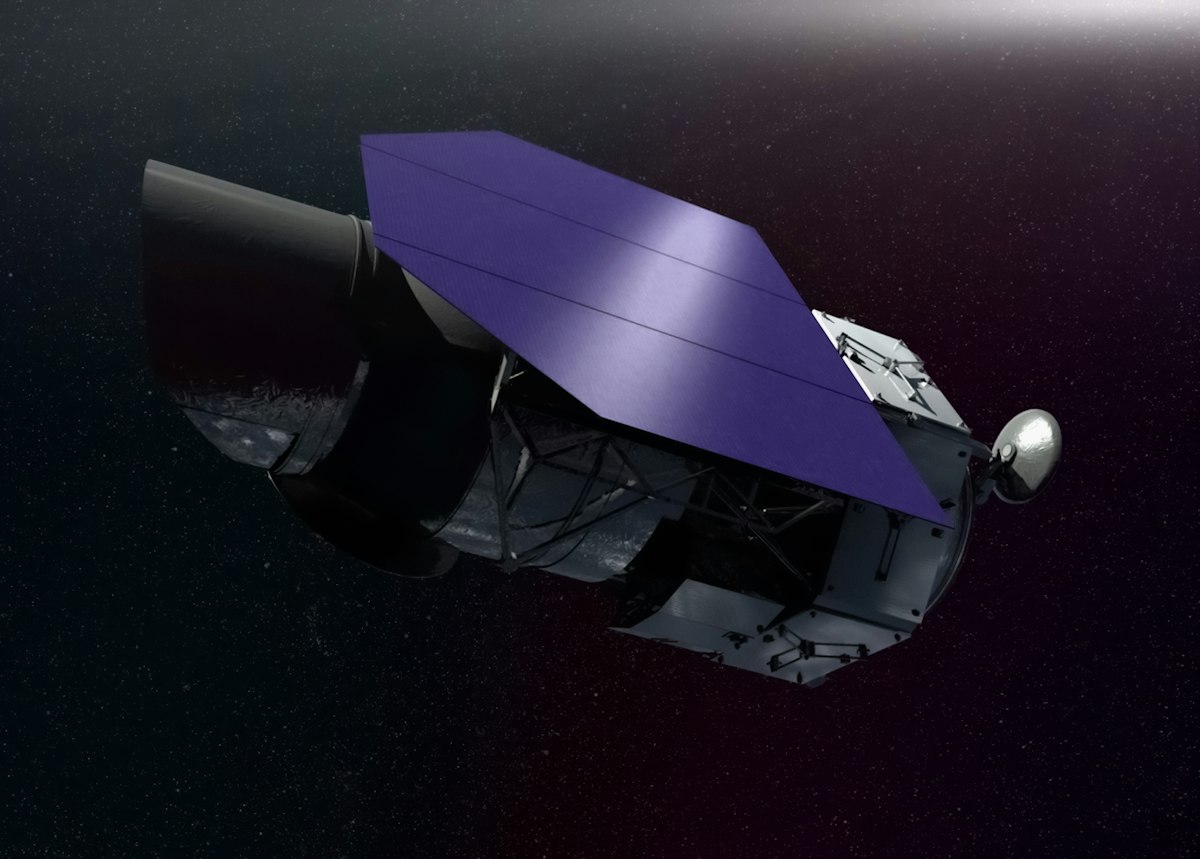
On October 31, 2026, NASA released data from the Webb telescope showing faint dust rings around several distant stars. Webb’s infrared imaging captured a diffuse halo of particles encircling a young stellar system. The data were collected in the infrared. Dust swirls.
Webb’s Latest Findings
Webb’s observations target planetary formation zones within a few hundred light‑years. The instrumentation specializes in mid‑infrared wavelengths, sensitive to warm dust. The study reports rings around three systems, each spanning a few astronomical units. The rings suggest material ejected from Mars‑sized bodies. The data were collected in the infrared.
Observations reveal a low‑density, extended dust cloud that does not align with typical planetary transit signatures. The halo’s brightness fluctuates modestly over several months. The study’s cadence precludes detection of transient collisions. The dust appears evenly distributed, hinting at a steady process. The data were collected in the infrared.
Interpreting the Dust Rings
Astrophysicists often equate dust halos with debris from recent impacts. Yet the inferred mass of each ring falls short of that required by a catastrophic collision. The rings’ temperature profile aligns with material heated by stellar radiation. Radiative transfer models match the observed spectra. The data were collected in the infrared.
Such rings could form when numerous Mars‑sized bodies grind down over time. The resulting particle size distribution matches the measured spectral slope. The debris field drifts like a forgotten constellation. The study does not detect bright clumps that would signal a single, massive collision. The data were collected in the infrared.
Collision Versus Accretion
High‑velocity impacts generate sharp spikes in infrared emission. The absence of such spikes suggests a slower, cumulative process. The study notes no sudden brightening events during the observation window. The rings persist uniformly across the fields of view. The data were collected in the infrared.
Low‑velocity encounters between Mars‑sized bodies could produce the observed dust without a large impact signature. The cumulative effect of many modest collisions increases particle abundance over time. The study’s temporal resolution limits detection of brief, intense events. The data were collected in the infrared.
Comparative Analysis of Similar Systems
Previous observations with the Hubble Space Telescope identified dust rings around larger stars. Webb’s sensitivity extends to fainter, cooler systems. The new data expand the census of systems exhibiting extended halos. The study compares spectral energy distributions across six targets. The data were collected in the infrared.
Statistical analysis shows no correlation between stellar age and ring brightness in the sample. This undermines a simple younger systems are dustier hypothesis. The rings’ morphology remains consistent regardless of stellar mass. The study suggests a universal process may be at work. The data were collected in the infrared.
Limitations of the Current Data
The study did not resolve individual impactors or clumps within the rings. Spatial resolution limits the ability to distinguish sub‑structures. Temporal coverage spanned only a few months, missing longer‑term variability. The study’s sensitivity threshold excludes dust below a certain mass. The data were collected in the infrared.
Future missions with higher angular resolution could isolate transient events. Spectral coverage beyond 10 µm would refine temperature estimates. The lack of ancillary optical data limits confirmation of stellar activity. The study provides a solid baseline but leaves key questions unanswered. The data were collected in the infrared.
Implications for Exoplanet Surveys
Exoplanet detection algorithms often assume clean circumstellar environments. The presence of pervasive dust fields could bias transit and radial‑velocity measurements. Survey planners must account for background infrared emitters when targeting young stars. The study recommends incorporating dust models into detection pipelines. The data were collected in the infrared.
Understanding the prevalence of dust halos informs theories of planetesimal growth. If low‑velocity accretion dominates, planet formation may be slower than previously thought. This could shift models of habitable zone development. The study’s findings call for revised timelines in planetary evolution simulations. The data were collected in the infrared.
Future Observational Strategies
Next‑generation observatories will offer finer spatial resolution and broader wavelength coverage. Coupling infrared imaging with millimeter interferometry could reveal sub‑structures within the halos. Longitudinal studies spanning years would capture transient events. The study proposes a coordinated observing campaign across multiple facilities. The data were collected in the infrared.
In the meantime, archives of existing data may harbor overlooked signatures. Re‑analysis with updated algorithms could uncover subtle variations. The study encourages the community to revisit archival infrared surveys. The data were collected in the infrared.
Future surveys will need to account for debris fields when targeting exoplanetary systems.
Broader Context of Stellar Evolution
Stellar nurseries host complex interactions that shape planetary architectures. The observed debris fields represent a critical phase in disk dispersal. Without tracking these environments, astronomers miss crucial constraints on planetary survival rates during early instability epochs.
Closing Assessment on Planetary Formation
Resolving the exact mechanics of these collisions requires sustained spectroscopic monitoring across multiple orbital cycles. Until then, these distant dust rings remain silent witnesses to the turbulent youth of planetary systems everywhere in the local galactic neighborhood.