Simulated Moon Dust Grows a Potato Root Fine
A substrate trial showed tuber crops tolerate crushed rock under lamps. Water, nitrogen, energy and gravity were never supplied by the dirt.
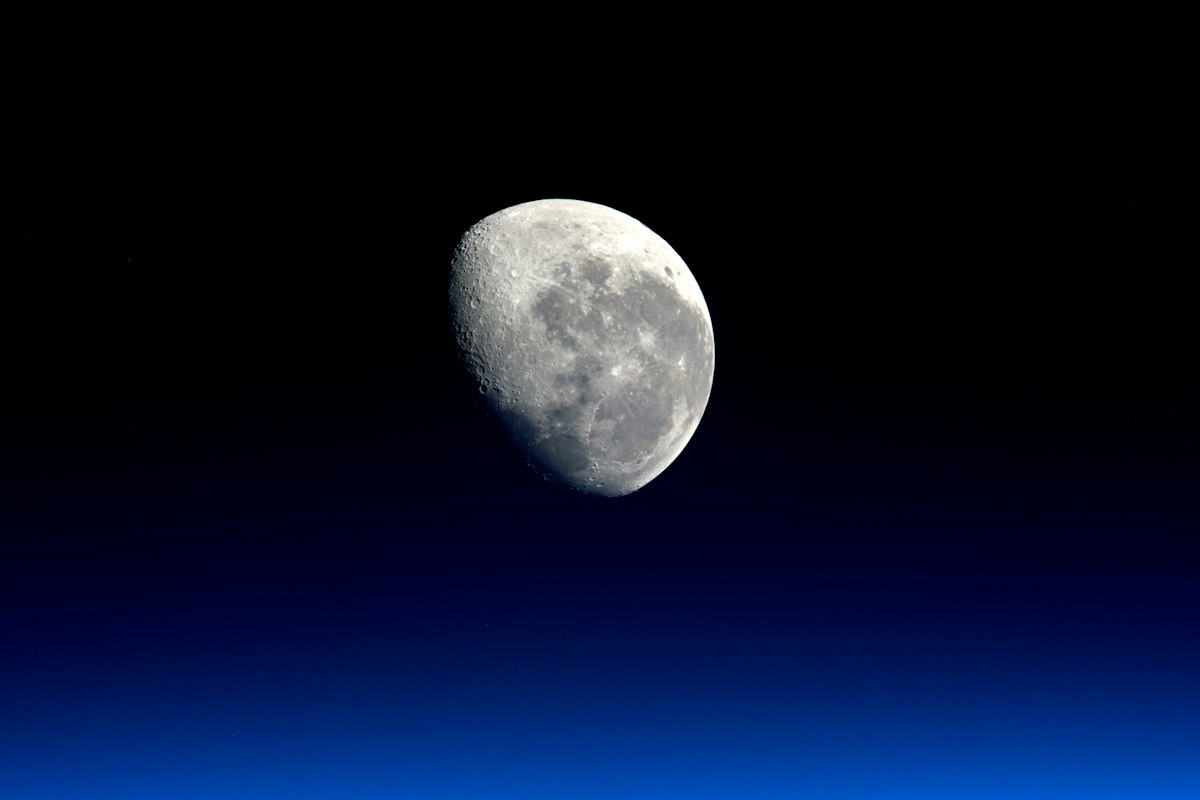
The powder in the jar is gray, fine, and slightly gritty between the fingers, like cocoa left open overnight. It was made on Earth, crushed and screened to a grain size chosen to resemble what a drill would encounter. Under lamps, and with a nutrient supply, potato roots ran through it and the plants finished a cycle. Space.com reported that result on November 23, 2026.
The finding is real and narrower than the headline habit allows. A potato that completes its cycle in crushed rock proves the medium is not hostile to a tuber crop once water and fertilizer arrive from a bottle. The moon supplies the pot, not the meal. Water, nitrogen, heat, light and gravity came from the room, and the room is the expensive part.
What the simulant is, and what it is not
Lunar regolith is what impact grinding leaves behind: angular grains, fused glass rims, and a static charge that makes the material cling. Simulants reproduce the grain size and much of the chemistry. They reproduce almost none of the abrasion or the electrostatics, and nothing in the jar has been reworked by micrometeorites. A root that thrives in simulant has met an easier surface than the one the mission will meet.
Which powdered rock the team used matters, and the coverage supplied here does not name it. Simulant batches differ by source volcano and by screening cutoff, and tuber crops are sensitive to those differences. Separate experiments in separate powders can disagree with neither result being wrong. Houseplants manage the same trick in bags at a garden center, which is not the comparison anyone wants.
The chemistry the dirt does not have
Crushed basalt and volcanic ash carry minerals, and minerals carry oxygen locked in crystal lattices. A root cannot take up lattice oxygen. It takes up nitrate, ammonium, phosphate and trace ions in solution. Plants get that solution from fertilizer, and fertilizer that is not sitting in the dirt is cargo. Lunar material brings almost none of the soluble fraction, having never met liquid water or a biology that builds humus.
Nitrogen is the sharpest case. It is abundant in the solar wind and in imported ammonia, and absent from a bag of gray powder. A lunar farm therefore starts as a chemical plant with horticulture attached, and the substrate trial is a small honest step inside that plant. Whether nitrogen arrives by tanker, by electrolysis stack, or by a waste loop changes the mass budget completely. The dirt cannot answer that question.
Normal gravity and what it hides
The plants grew at normal Earth gravity, in a chamber, under a day length someone set on a timer. None of the conditions that make the Moon difficult appeared in the treatment list, because a substrate screen is built to exclude them. That design is correct, and it is also why the result travels badly. Tuber initiation, water movement through a wet medium, and root architecture all respond to gravity.
The trial asks a narrow question: is this material toxic enough to kill a tuber crop. A positive answer removes lunar potatoes from the program. A negative answer leaves the work open for another season. Nothing in the chamber speaks to whether the crop is worth the containment and power hardware around it.
The defense of the experiment, at its best
A fair defense begins with sequence. Nobody builds a lunar greenhouse as a finished system, because components get qualified one at a time and a growth medium is a component. Screening crushed rock for crop toxicity is cheap, fast and reversible in a way that a habitat module is not. Learning early that potatoes tolerate the medium removes a failure mode before anyone pays for a pressure vessel around a garden.
Second, the crew argument. A food grown onboard is also a task, a morale object, and a backup against a delivery that does not arrive. Those values are real, and they do not require the crop to pay for its own mass. A potato grown for calories sits on a different request than a potato grown for a Thursday afternoon, and programs fund both for different reasons.
Both arguments hold only while the substrate stays a component rather than being announced as a milestone. Screening is cheap, and it should be done. Then the program reaches a line where water recovery, light energy and nitrogen supply must be paid in the same tonnage as the crop. That accounting is where lunar food has been losing for decades. The potato in the simulant tells us the medium is not the obstacle.
What a potato buys that lettuce does not
Staples and salads are different purchases, and the coverage blurs them. Leafy greens mature fast, need little mass per tray, and pay back in morale and micronutrients. A tuber crop is slower, heavier, and grown for calories, which is the category where launched packaging is hardest to beat. Potatoes were chosen because a potato is an impressive plant to grow in powder. That is a legitimate laboratory reason, and it sits on a different budget line than calorie supply.
The figures that would settle it
The dirt passed.
The supplied coverage answers a yes-or-no question, so the quantities that decide whether the answer matters are missing. The figures a planner needs are tuber yield per plant and days from planting to harvest. Then water consumed per kilogram produced, and electricity per plate. None of them is a botanist's number. They are the figures that turn a surviving plant into a line item, and a substrate trial does not have to carry them.
There is also the arithmetic no substrate paper carries. A chamber potato turns light into starch at an efficiency set by the lamps and the power they draw. A lunar greenhouse adds shielding and a pressure shell on top of that electricity. Packaged food launched from Earth competes against all of it. The comparison is decided by calories per kilogram delivered, and growth chambers do not report that number.
What to look for next
The next report worth reading is the one that closes a loop. If a team grows a tuber crop on recycled water, with nitrogen made on site and electricity accounted for, the result moves from botany into engineering. If it reports harvest index and days to tuber instead of survival, the number becomes usable in a mass budget. Those changes are visible in the figures before anyone writes about them.
Watch for a reduced-gravity treatment, even a clinostat or a parabolic flight, since nobody can argue that variable from a chamber. Ask which powder was used and where it came from, because agreement across different simulants separates a material property from a lucky sample. Those questions cost a paragraph to answer, and their absence is loud.