A Chromosome Editing Workflow Pushes the Bottleneck Back Into Tissue Culture
Rearranging whole plant chromosomes at chosen addresses has been demonstrated before. What is scarce is a procedure a difficult genotype can survive.
The claim sits in an adjective
Phys.org's item from Nov 24 puts its weight in one adjective: programmable. The noun underneath it is not new. Plant scientists have cut, swapped and re-ordered defined stretches of DNA for years. That word is worn thin. What the headline promises is a different kind of work, and the pipeline behind it deserves attention.
The thesis here is that the interesting object is the workflow rather than the enzyme. Chromosome-scale manipulation in plants has been demonstrated before, and each demonstration was a single act of craftsmanship in a species that cooperated. A workflow turns one result into a procedure another lab can repeat on a genotype nobody has optimized. That shift is where a tool begins, and it is a rarer event than a clean edit.
Where the work actually fails
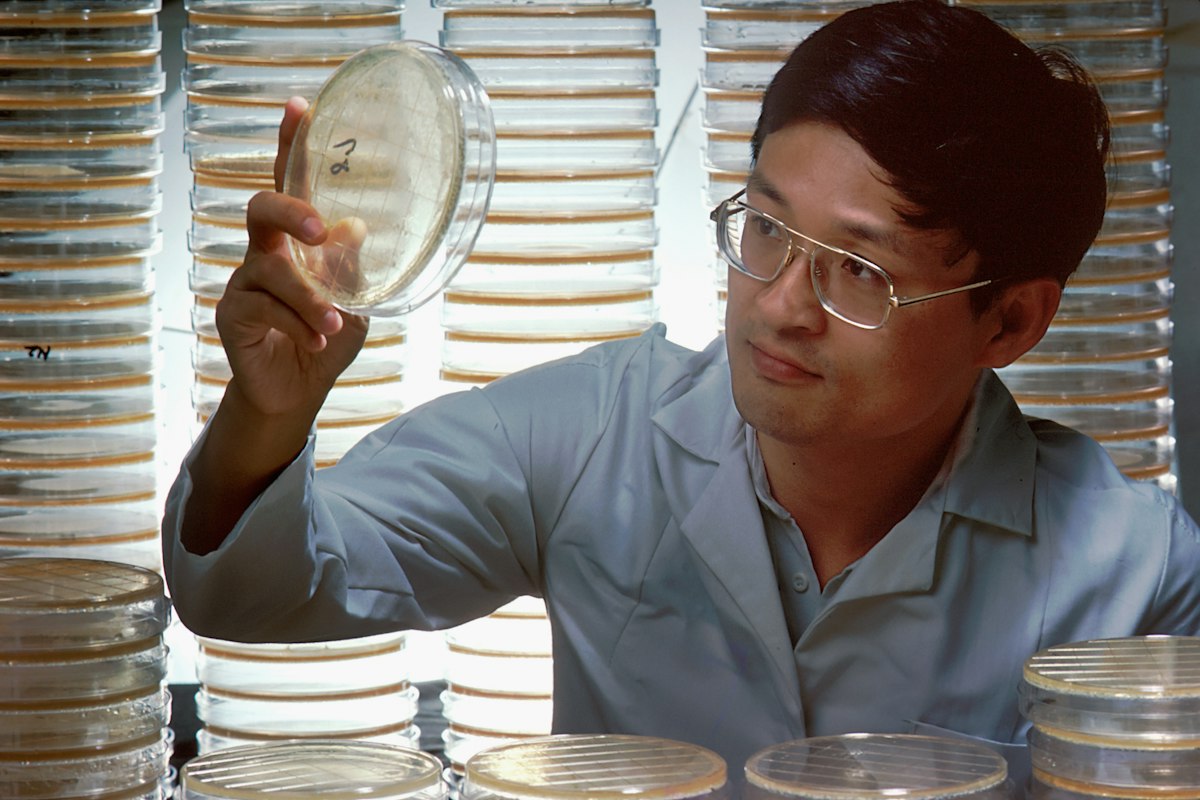
Delivery never reaches the graphic. In a plant, an editor must reach a living cell, find its chromosome sets, and act before the cell divides itself out of the opportunity. Then the edited cell has to become a whole plant, with roots. That step backward into an organism is a developmental trick some genotypes perform and others refuse.
This is why a workflow paper can outrank a reagent paper. A better enzyme widens what is possible in a cooperative lab. A better workflow changes who can do the work, because it moves the criteria off the instrument and onto husbandry. The decisions are mundane: how long a plate sits, which tissue is picked, what gets thrown out before anything is scored. In the rooms where this work happens, the bottleneck is visible first. A figure comes later. Shelves of browning tissue never green.
Programmable means the layout is the target
A gene edit changes a sentence inside the text. Chromosome editing rebinds the book: which segment sits next to which centromere, whether a stretch is flipped, doubled, moved, or cut loose. Those are different biological problems. A small change can pass through a generation unnoticed. A rearrangement changes how the whole molecule behaves at division, and it changes what a plant hands to its seed.
Programmability, in this context, is a demand about coordinates. The method must place breaks at chosen addresses, in a chosen order, and leave the cell a predictable product instead of a lottery of rejoined ends. Whether the reported method meets that demand beyond its showcase genotype is the question a careful reader should keep open. No headline answers that.
The strongest case for calling this routine
The skeptical reading deserves its strongest form. Large-scale rearrangement in plants is not new. Breeders have spent decades moving whole chromosome segments through irradiation and bridge crosses that nobody designed base by base. Cytogeneticists, meanwhile, have produced inversions and extra chromosome arms with no molecular design at all. On that account, a cleaner route to an old outcome buys precision and leaves the harvest alone.
Precision is expensive.
The reply is that precision is the product, and it has always been expensive to buy. Irradiation shuffles, so the operator cannot say which segments moved, or what vanished at the join. A breeding program pays for that ignorance in years of backcrossing. A method whose output is a list of known coordinates changes the accounting. Counting is unglamorous work. It is also where the years go.
What to ask a chromosome workflow before believing it
Start with the second generation. A rearrangement scored in the treated plant is a cytological event; the same structure intact in its seedlings is a heritable tool. Chimeric tissue is the classic false dawn. A shoot can carry edited cells in some layers and not others, and whoever scores it will read the plant as a success. The honest test is progeny, scored by the method that found the original event.
Then ask about the join. Any break can be repaired by the cell into something the designer did not order. What should be reported, at minimum, is how often the intended structure is what the assay actually reads. Ask what the workflow does to fertility, and to how a rearranged chromosome behaves at meiosis. A fragment with no centromere is lost at division, and a chromosome carrying more than one is torn in half. Ask which genotypes were attempted, and which were left out of the figure.
Why plants are the hard case
Plant genomes are uncooperative in nameable ways. Many crop species are polyploid, so a designed change must be aimed at several near-identical copies and then told apart from them afterwards. Some carry vast repetitive blocks where a designed break has no unique address to find. Many important genotypes will not regenerate from tissue culture, which leaves the best protocol in the field useless for the variety a grower actually plants. And the assay is slow, because a whole plant must be grown before anyone can read what happened to its chromosomes.
A workflow that survives those constraints offers something the field has mostly lacked: a route specified well enough to be handed over. Protocol detail is the least cited part of plant biology and the most decisive. Read the supplementary methods and you learn fast whether a second lab will eat the same year. Naming a method after its best day has long been a habit here.
Who gains first, and who does not
The near-term beneficiary is the chromosome-level breeder and the plant cytogeneticist. The seed catalogue sits years downstream. Placing a segment at a chosen address makes linkage groups and recombination suppression addressable as questions, without waiting for a rare natural event. That is a research instrument first. Anyone reading it as a new class of crops this decade is skipping the step where the plant must be regenerated, grown, and progeny-tested.
Regulation is a separate argument. It is also mostly jurisdictional. Whether a rearranged plant falls under a GMO review turns on local rules about mutation and about foreign DNA. A workflow that leaves no transgene behind is playing a different game than one that inserts one. None of that is settled by a method paper, and this analysis cannot say which way any regulator will move.
What this piece could not check
One limit should be stated plainly here, because it shapes how much weight everything above can carry. This piece is written from a headline and a summary line; the underlying paper was not reachable for verification when it was drafted. Which species was edited, with what construct, at what rate, and with what effect on fertility are all unknown here. No plant is named and no rate is quoted, because there was nothing verified to quote from.
What would change this reading is a second lab, on a difficult genotype, publishing a structure it asked for and finding it in the next generation. Nothing in the item lets a reader check whether the procedure holds outside the lab that wrote it. That limit is the reason every claim in this piece is labeled analysis.